
Jellyfish Outbreak: Affected Areas and Live Map
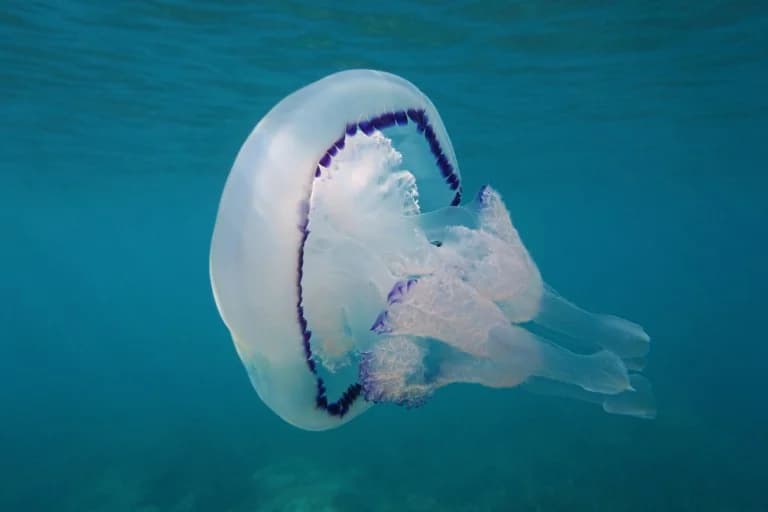
Increased presence of jellyfish in Greek seas is causing concern, especially in areas such as Chalkida, Northern Evia, and the Sporades. The Hellenic Biodiversity Observatory points out that the spread is faster than initial estimates.
Specifically, Northern Evia is facing a serious problem, acting as a passage from the Pagasetic Gulf to the open sea. The Pagasetic Gulf continues to have a jellyfish presence, mainly on its eastern coasts. The outbreak has reached the Northern Sporades, with confirmed presences in Skiathos and Skopelos.
See the live map of dangerous beaches.
Bite symptoms: Erythema, swelling, burning, dermonecrotic, cardio- and neurotoxic effects. In severe cases, nausea, drop in blood pressure, tachycardia, headache, vomiting, diarrhea, bronchospasm, dyspnea. In case of systemic symptoms, immediate transfer to the hospital is required.
EODY advice:
- Remove tentacles carefully.
- Rinse with plenty of sea water.
- Do not use fresh water.
- Apply ice or cold compresses.
- Apply cortisone cream.
- Take an antihistamine.
For severe symptoms, visit a hospital or Health Center.