
The 'Invisible' Health Risks for Firefighters: Heat and Smoke
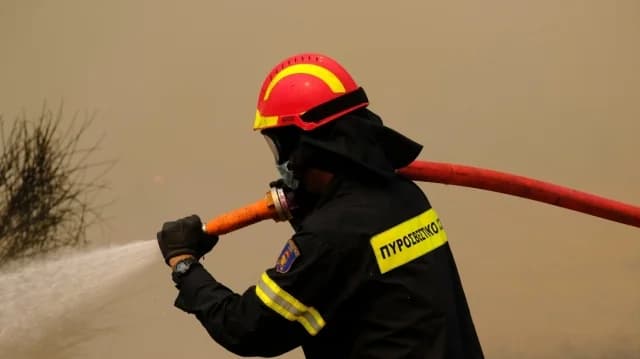
Firefighters face serious health risks during fire suppression, according to Professor Giorgos Sakkas of the Department of Physical Education and Sports Science at the University of Thessaly.
Working in high temperatures with heavy protective gear significantly increases heat stress. The body tries to dissipate heat through perspiration, but if fluids and electrolytes are not adequately replenished, dehydration and reduced kidney blood flow can occur, increasing the risk of acute kidney injury.
Professor Sakkas points out that smoke from forest fires, a complex mixture of particulate matter (PM2.5), carbon monoxide, and other chemical compounds, exacerbates asthma, increases inflammation, and burdens the heart. Inhaling these particles can cause systemic inflammation and oxidative stress, affecting the kidneys, especially when dehydration is present.
For prevention, Professor Sakkas suggests organized breaks, shaded recovery areas, systematic hydration, and training in recognizing symptoms of heat stress. Monitoring health indicators and timely medical evaluation are also important.