
Free Will: An Age-Old Philosophical Debate
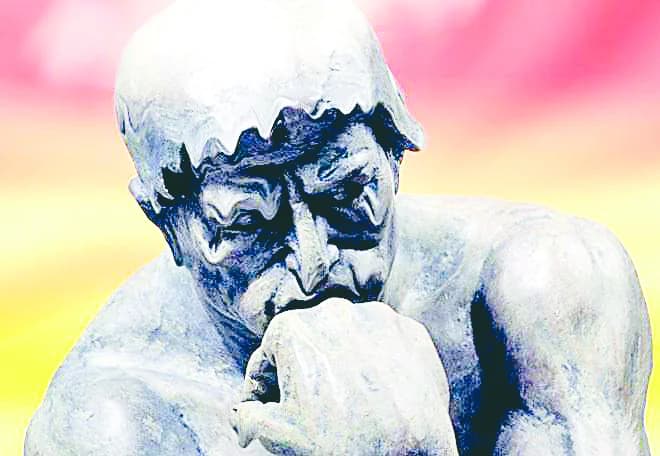
Does free will exist? This is a question that has occupied philosophers and scientists for centuries. The article examines this ancient debate, starting with the simple question: Is it our decision whether to continue reading a text?
Scientists argue that our choices are not as free as we believe, as they are influenced by factors such as genes and the environment. Plato was the first to raise the issue, arguing that no one is bad willingly, but due to bad conditions and lack of education.
Aristotle, on the other hand, argued that education and philosophy can change the outcome. He introduced the term 'proairesis' to describe the free will of man to act as he wishes.
Pierre-Simon Laplace, with his idea of the 'Laplace's demon,' argued that if we know all the past conditions, we can predict the future. However, quantum mechanics and the principle of uncertainty challenge this determinism.
Dr. Elsa Nicolaidou, author of the books 'The Philosophy of Happiness' and 'Philosophy for All,' concludes that the very fact that we ask the question about free will means that we understand our ignorance and choose knowledge, changing our environment and our choices.