
Lighthouse of Alexandria: The Story of a Wonder
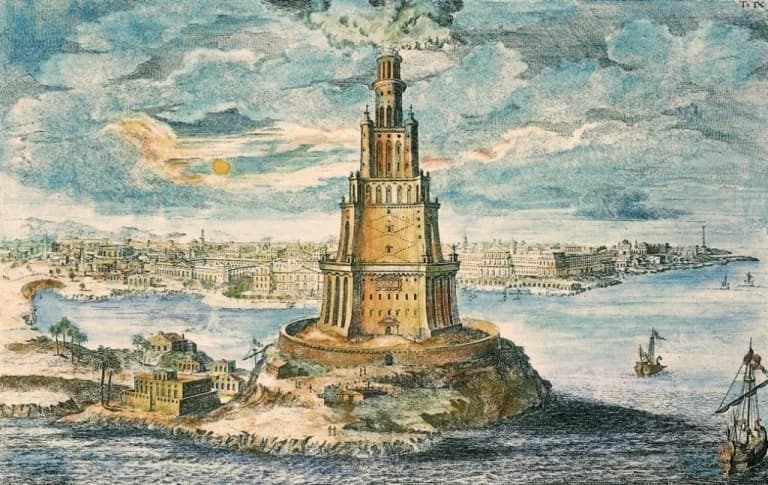
The Lighthouse of Alexandria, one of the seven wonders of the ancient world, stood approximately 120 meters tall and was built in the 3rd century BC on the island of Pharos, off the coast of Alexandria.
Its construction was commissioned by Ptolemy Philadelphus to the architect Sostratus of Cnidus. The lighthouse consisted of three parts: a square base, an octagonal middle section, and a cylindrical upper section, topped by a statue of Poseidon.
It functioned until the Arab conquest of Alexandria in the 7th century. Earthquakes, most notably the one in 1303, caused its gradual destruction. Finally, in 1324, it completely collapsed. In its place, Emir Qaitbay built a fortress using the remaining materials.
The Lighthouse of Alexandria was not just a navigational aid, but also a symbol of the city and its intellectual prosperity, as it was linked to the Library and Museum of Alexandria.