
Allende's Overthrow: The US Role in Chile (1973)
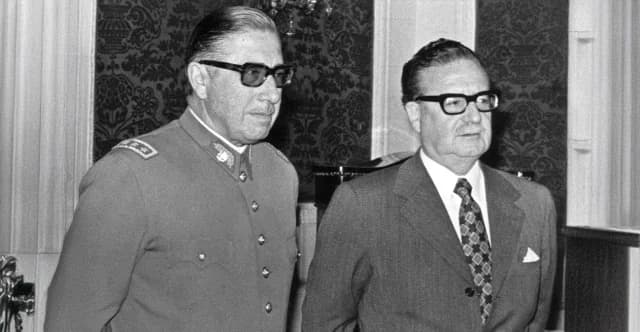
In 1973, Salvador Allende, the democratically elected President of Chile, was overthrown by General Augusto Pinochet, an event that had dramatic consequences for the country. At the height of the Cold War, the United States supported dictatorial regimes in various countries, including Chile, to prevent the spread of communism.
In the 1964 presidential elections, the U.S. attempted to influence the outcome in favor of the center-right candidate, Eduardo Frei. Nevertheless, in 1970, Allende won the elections. The then U.S. President, Nixon, considered the Allende regime "unacceptable" and attempted to organize a coup through the CIA, which did not materialize.
During his term, Allende nationalized copper factories, provoking a reaction from the U.S., which declared an informal economic war on Chile. In September 1973, Pinochet overthrew Allende in a military coup. Allende committed suicide, while thousands of Chileans became victims of the ensuing junta.
Pinochet's junta dissolved Congress and suppressed all political activity. Arrests and torture of Allende's supporters were common occurrences. The number of victims of the junta is indefinite, with thousands dead and tortured.
Declassified documents reveal the active participation of the U.S. in Pinochet's coup. Despite the fact that Chile did not become Cuba, thousands of residents of the country suffered the consequences of the dictatorship.